
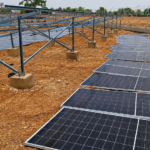
The deployment of the 4MGT Solar Project in Bali Local Government Area of Taraba State has sparked discussions among residents over the best approach to addressing the area’s electricity challenges.
The solar project, provided by Senator Haruna Manu for his constituents in Bali, has received mixed reactions, with some residents welcoming the initiative as a potential solution to persistent electricity shortages, while others are calling for greater investment in infrastructure connected to the National Grid.
Supporters of the project see the introduction of solar power as an important intervention in an area where access to reliable electricity remains a major concern. They believe the project could provide households and businesses with an alternative source of power, particularly during periods when electricity from the National Grid is unavailable or inadequate.
However, some residents maintain that the long-term priority should remain the provision of dependable National Grid electricity. They argue that strengthening existing grid infrastructure would provide a broader and more sustainable solution to the community’s electricity needs.
Another position gaining support among residents is that Bali should not have to choose between solar power and the National Grid. Instead, they argue that both systems can operate alongside each other, with solar energy complementing grid electricity and providing an alternative source whenever grid supply falls short.
Questions have also been raised about whether electricity generated by the solar project will be provided free of charge or on a commercial basis. However, electricity supplied through the National Grid is also paid for by consumers. The more important considerations, therefore, are expected to be the cost of electricity, reliability of supply, available generating capacity, geographical coverage and the long-term sustainability of the system.
Under the proposed arrangement, beneficiaries of the solar project are expected to have electricity meters installed, allowing them to purchase power according to their actual consumption rather than relying on estimated billing.
If properly implemented and maintained, the solar system could provide electricity for essential household activities such as lighting, powering fans and televisions, refrigeration and other basic appliances, depending on the capacity available.
For small businesses, dependable solar electricity could also support daily operations and reduce dependence on petrol or diesel generators, potentially helping to lower energy and operating costs.
Despite the solar intervention, residents’ demand for improved National Grid infrastructure remains legitimate. Reliable grid electricity can provide communities with access to a wider power network and, where generation and distribution infrastructure are sufficient, support larger household, commercial and industrial energy requirements.
Residents therefore continue to call on relevant authorities and stakeholders to address challenges affecting electricity supply in Bali and surrounding communities.
Rather than treating solar power and the National Grid as competing options, a complementary approach could allow both systems to contribute to improving electricity access. Solar energy could help bridge supply gaps while investments continue to strengthen the National Grid and expand its reliability and coverage.
The central issue for Bali may therefore not be whether residents should choose solar power or the National Grid, but how both sources can work together to provide reliable, affordable and sustainable electricity to the community.
As Nigeria continues to grapple with electricity access and reliability challenges, decentralised renewable energy projects such as solar installations can provide valuable supplementary power, particularly in communities where grid supply remains inadequate.
For Bali, the long-term impact of the 4MGT Solar Project will depend not only on its installation but also on effective management, affordability, maintenance, coverage and its ability to complement wider efforts to improve electricity infrastructure across the area.



No Comment! Be the first one.