



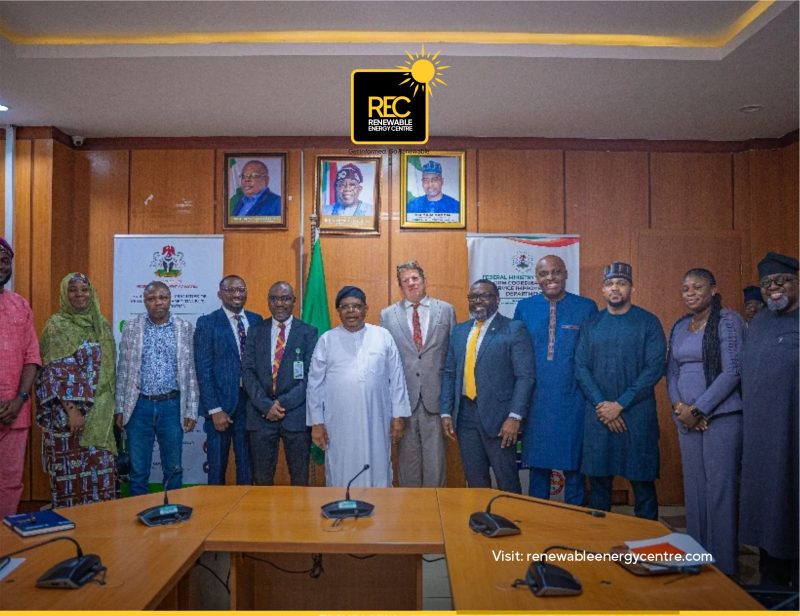
On June 25, 2026, AP3 Advisory and Ratio Consulting, the implementing partners for the United Kingdom’s Partnering for Accelerated Climate Transitions, UK PACT, Nigeria Energy Programme, delivered a detailed strategy to tap Nigeria’s small hydropower resources using private investment. The plan was presented to the Minister of Power, Joseph Olasunkanmi Tegbe, during a high-level session at the Federal Ministry of Power in Abuja.
The session, themed “Mobilising Private Sector Capital to Catalyse Small Run-of-River Hydropower at Scale for Rural Electrification and Industrialisation,” brought together senior officials from the Federal Ministry of Power, the Rural Electrification Agency, REA, officials from the British High Commission, development finance institutions, state representatives, utility operators, and private investors. The focus was on identifying actionable routes to fast-track funding for Nigeria’s largely idle hydropower sites.
AP3 Advisory used the forum to illustrate how Nigeria’s existing run-of-river facilities can be repurposed into profitable renewable energy projects through brownfield small hydro development, without placing a heavy financial burden on the Federal Government. The team pointed to Nigeria’s roughly 14GW of technically feasible hydropower capacity, noting that over 85 per cent of it is still unused even after years of public spending on water infrastructure.
As the lead partner for the UK PACT Nigeria Energy Programme’s small hydro component, AP3 Advisory also updated stakeholders on three pilot sites: NESCO Cascade in Plateau State, Ikere Gorge in Oyo State, and Ghari Dam in Kano State. The goal of the pilots is to show that bankable project preparation, thorough technical work, and strong public-private partnerships can create renewable energy systems that expand rural electricity access, support productive uses, and stimulate industrial growth.
According to Dr. Gori Olusina Daniel, Managing Partner at AP3 Advisory and Programme Director for UK PACT, the effort is not limited to the three pilot locations. The programme has already carried out substantial technical and commercial risk mitigation, including pre-feasibility studies, investment-grade financial models, environmental and social impact reviews, regulatory assistance, and the creation of a National Small Hydropower Asset Register. That register highlights more than 32 priority brownfield locations with over 500MW of capacity that could be developed in the near term.
Dr. Paul Healey, Head of Private Sector and Green Growth at the British High Commission and representative of the UK Foreign, Commonwealth and Development Office, FCDO, restated the UK’s resolve to back Nigeria’s energy transition through responsible private financing.
Minister Tegbe received the proposal positively, calling small hydropower a key element of Nigeria’s broader energy mix. He pledged the government’s continued support for increasing generation capacity and for solutions that are both financially sustainable and deliver clear development outcomes.
The meeting ended with talks on policy steps needed to scale deployment nationwide, including drafting Nigeria’s first National Small Hydropower Policy, improving regulatory alignment, and maintaining joint efforts to draw private money into renewable energy infrastructure.
Through the UK PACT Nigeria Energy Programme, the UK continues to assist the Federal Government in advancing commercially viable renewable projects aimed at broadening energy access, enhancing infrastructure resilience, and speeding Nigeria’s shift to a cleaner and more diversified power sector.