


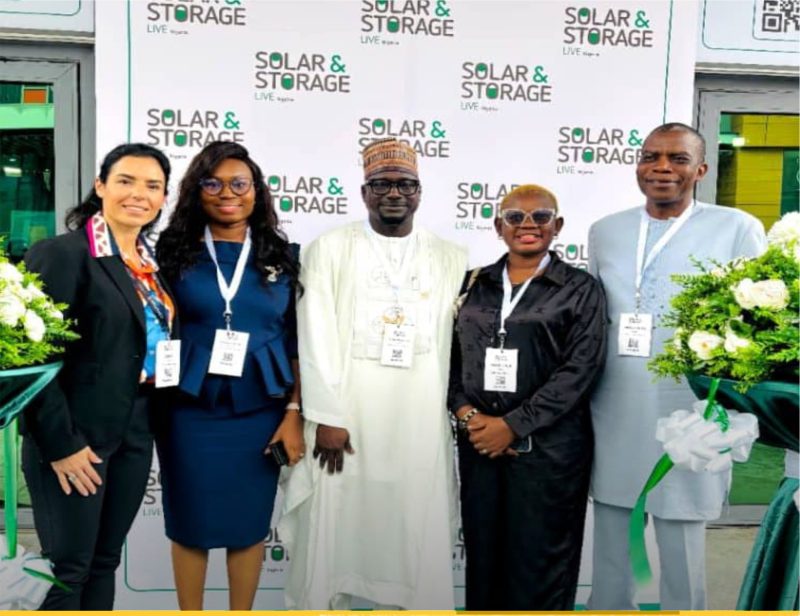
Falling equipment costs, better battery storage, and smarter energy systems were the big topics at ‘Solar & Storage Live Nigeria 2026’. Industry leaders said Nigeria’s renewable energy market is now entering a new phase.
Speaking to journalists at the event, President of the Renewable Energy Association of Nigeria (REAN), Ayo Adedimulua, said solar and other renewables are no longer too expensive.
“Component costs have dropped by more than 100 per cent in the last 10 to 15 years. In some cases, prices have fallen by 200 to 300 per cent,” he said.
He explained that this has changed how power is produced. Solar is now competing better with diesel and petrol generators.
“Every naira spent on diesel or petrol is gone once it is used. But every naira invested in solar panels or batteries keeps giving value for many years,” Adedimulua said.
He added that Nigeria has more than just solar. The country can also use hydro, wind, biomass and geothermal energy, but these have not been fully explored.
“We have everything we need,” he said. “What we lacked before was the confidence to manage risk well.”
He noted that more manufacturers, investors, banks and government officials attended this year’s conference. He said this shows growing confidence in the sector.
Also speaking at the event, the Managing Director of the Rural Electrification Agency (REA), Abba Aliyu, said battery storage will be the next big area for investment.
“The next wave of money will not go into power generation. It will go into storage. That is where the real change will happen,” he said.
Aliyu said REA is building 48 connected mini-grids with a total capacity of about 288 megawatts. The goal is to link isolated power systems and make electricity more stable.
He said all new REA mini-grids will use smart meters with Internet of Things (IoT) technology. These meters can send and receive data to help with billing, load control and maintenance.
The REA boss also said the agency is using artificial intelligence to map more than 750,000 communities in Nigeria. The data helps them know where people live, what they can afford, and where projects will work best.
“We know where the people are. We know what they can pay. We know which areas make business sense,” he said.
On policy, Aliyu said the Electricity Act 2023 now allows state governments to regulate electricity. This, he said, opens more chances for private investors, but progress has been slow in some states.
“The reform is important. States now have the power. The question is whether they have the drive to use it,” he said.